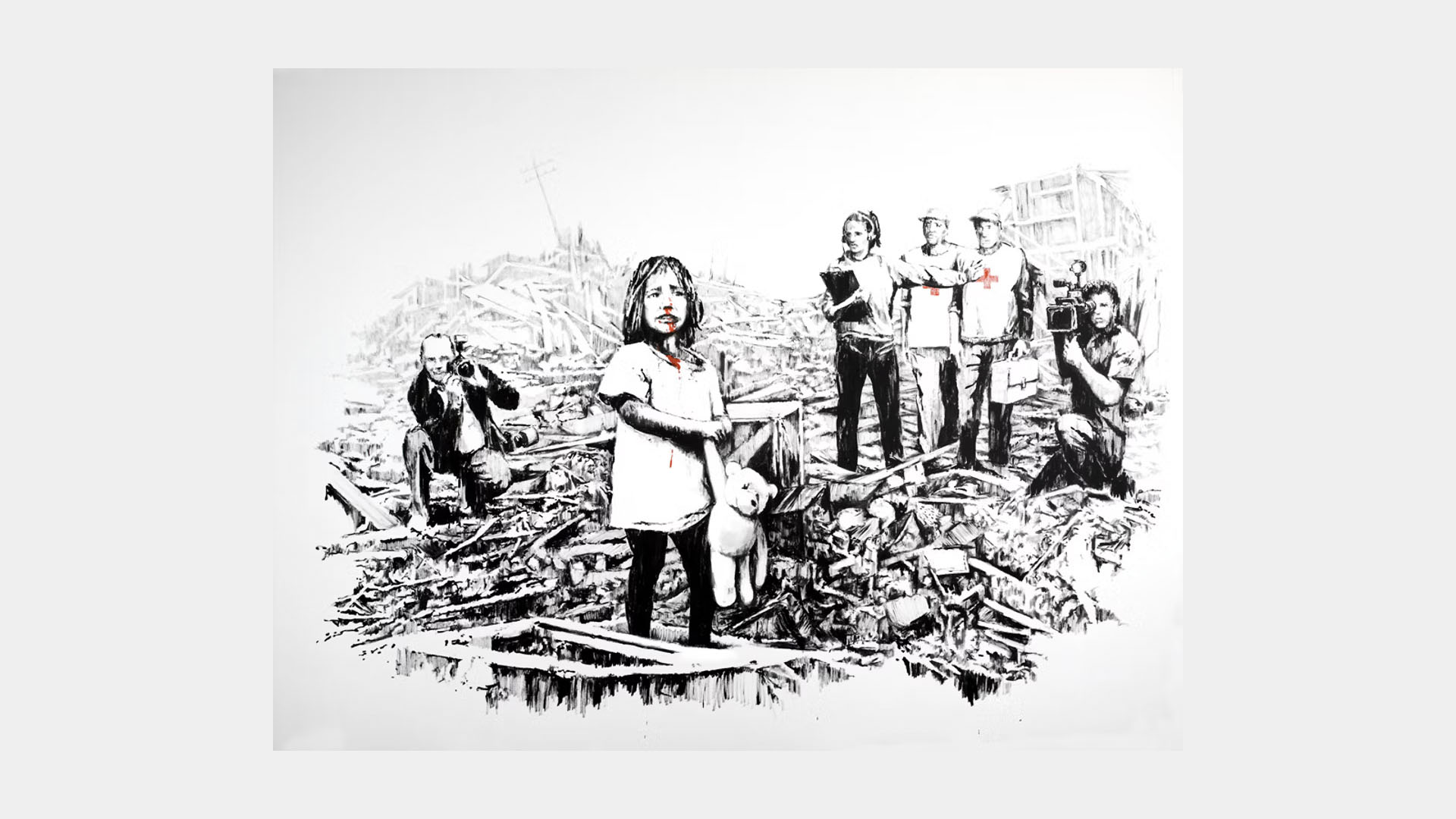
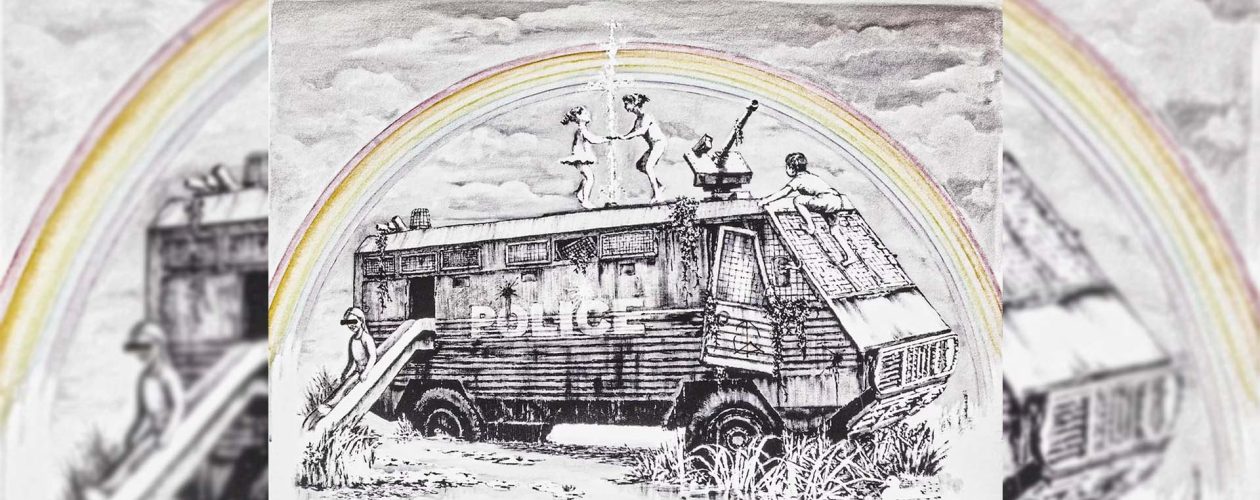
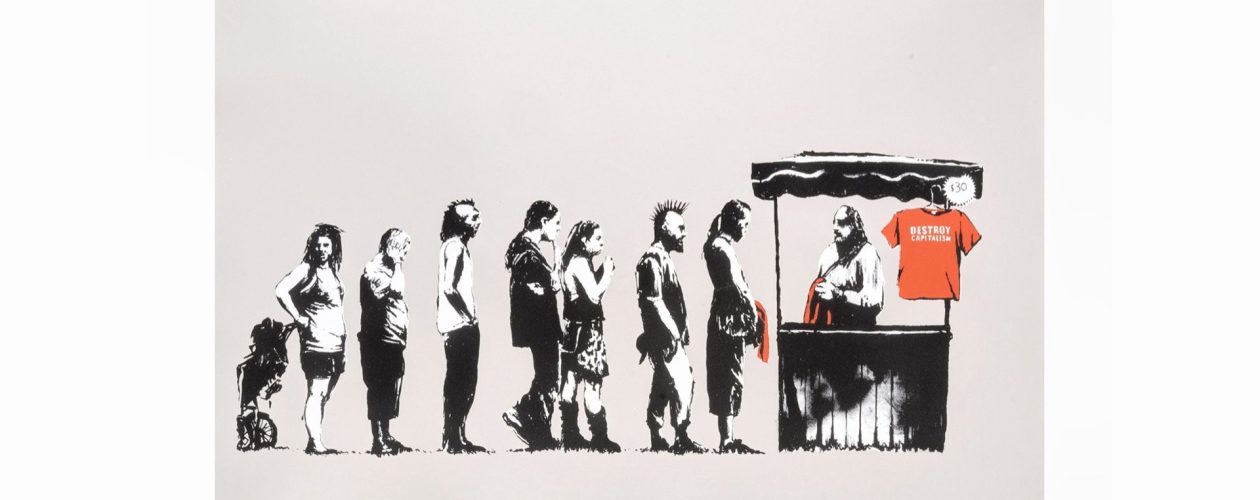
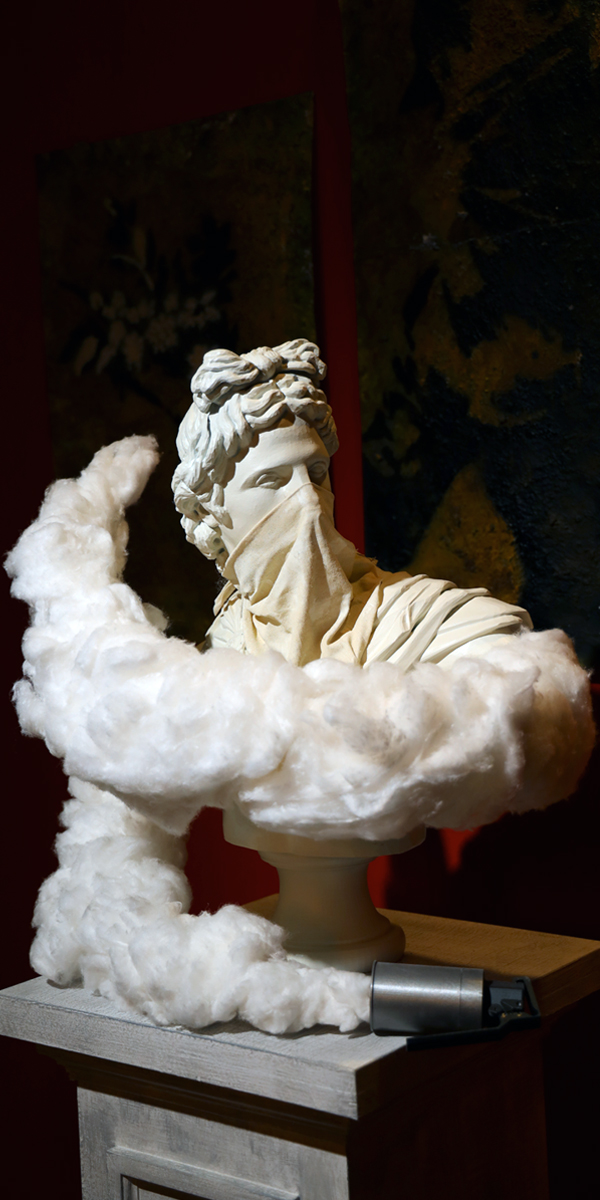
This piece questions how war is turned into an image, and behind it lies a specific philosophical debate.
In texts he wrote during the Gulf War in 1991, the French thinker Jean Baudrillard made a striking claim: the Gulf War did not take place. Baudrillard was not, of course, saying that people had not died. What he meant was that for the Western viewer, the war had stopped being a lived event and had become a broadcast watched on a screen. Green tinted night vision footage, target lock displays, live feeds. Once war was presented in the visual language of a video game, viewers could no longer tell it apart from fiction.
This is the question at the heart of the piece: whether the way the media presents an event matches the event itself. This work has been called “the pornography of war”, the act of tearing suffering out of its real context and turning it into a consumable spectacle.
The comparison to pornography is deliberately harsh. Pornography strips an act entirely of its context, its relationships and its consequences, and presents it only as image. When war reporting does the same thing, what is left is a spectacle the viewer can consume without feeling any responsibility.
Banksy has returned to this theme many times throughout his career. Television screens, cameras, newspaper headlines and news presentation are motifs he has used again and again. What they all have in common is that they force the viewer to look not at what is being shown, but at how it is being shown.