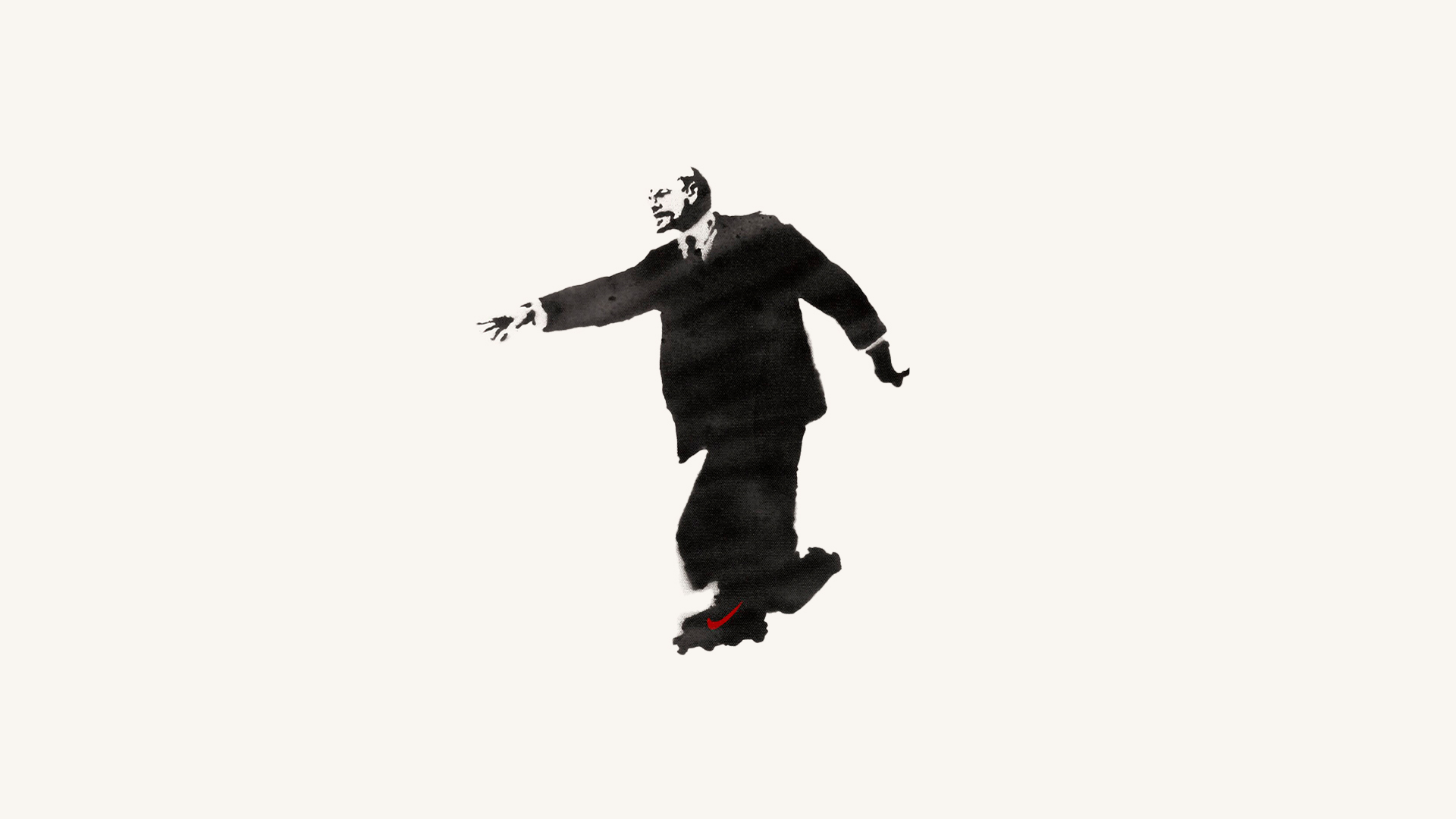
Lenin on Rollerblades (Who Put the Revolution on Ice?) appeared in 2003 in London as Banksy’s politically satirical spray-paint-on-canvas series.
In the work, revolutionary leader Vladimir Lenin skates on Nike-logo rollerblades, keeping his balance with his arms; his face as stern and determined as in propaganda posters.
In Soviet propaganda Lenin’s image was usually depicted with one arm outstretched. Banksy re-contextualises this iconic gesture of power as a mere balancing movement while roller-skating, thus satirising it. By equipping Lenin with Nike rollerblades, a symbol of American capitalism, he turns the revolution into a figure on ice. Banksy mixes an authority figure with pop culture, thereby mocking the commercialisation of revolution.
He questions how revolutions and ideologies become diluted over time; while Lenin skates on rollerblades, he ridicules communism being swallowed by capitalism. The Nike brand on the skates symbolises American consumer culture reducing the Soviet legacy to ‘entertainment’; the work highlights the absurdity of oppressive regimes and the irony of individual freedom. Banksy implies that the revolution has been ‘put on ice’, criticising the transience and adaptability of political ideologies.
Critics describe the work as ‘an absurd portrait of authority figures’.
Banksy himself said: ‘All graffiti is low-level dissent, but stencils have an extra history. They’ve been used to start revolutions and to stop wars.’